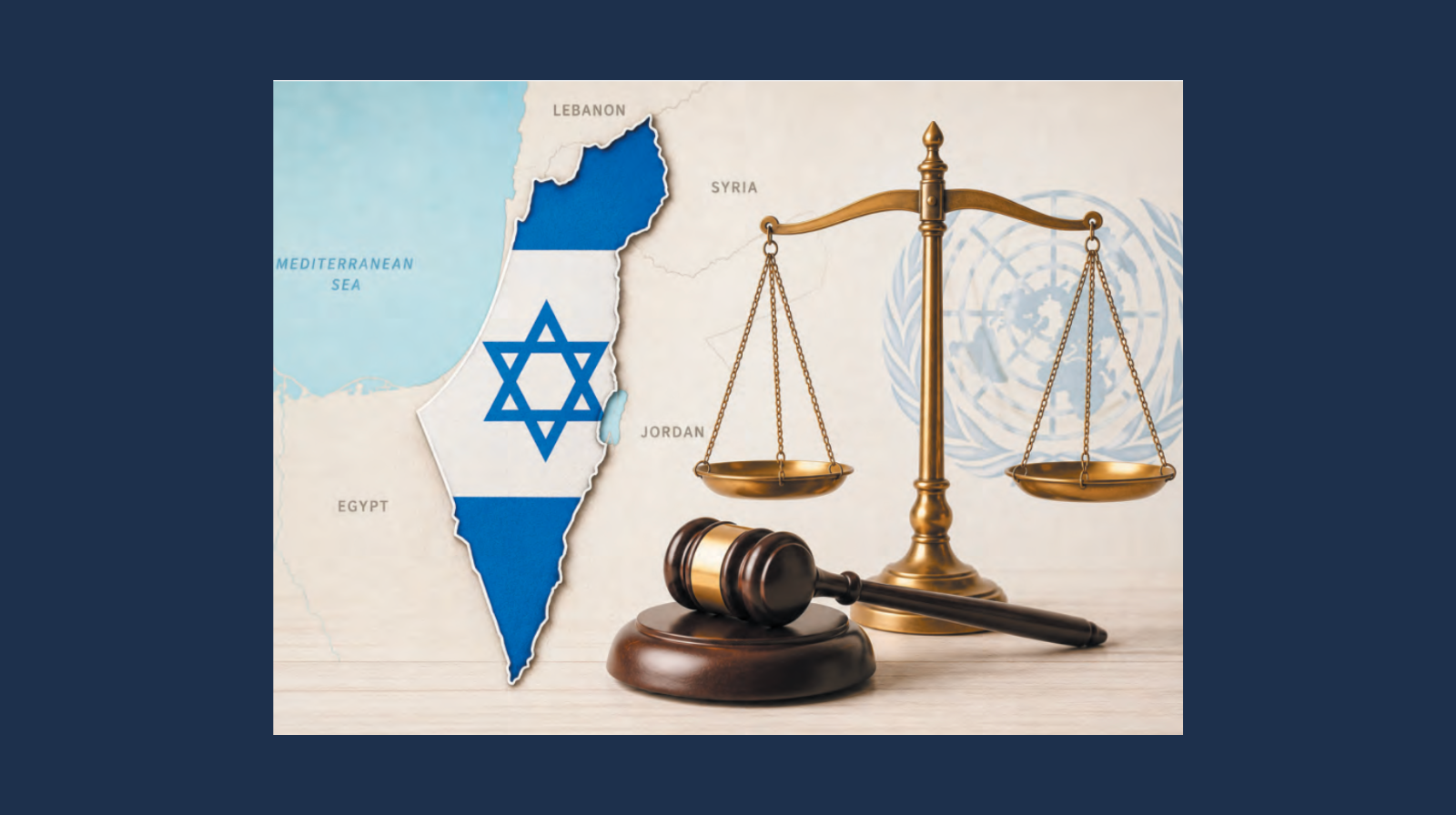
On May 22, it was announced that the Dutch government has decided to implement a ban on trade in goods originating from “illegal Israeli settlements.” The government has submitted a draft regulation for a “Temporary Sanctions Decree on Illegal Settlements in the Israeli-Occupied Territories” to the Advisory Division of the Council of State for urgent advice.
We regret this step, as we believe that peace and security are achieved through dialogue and cooperation, not through selective sanctions. We also believe there are significant legal obstacles to such a measure, which runs counter to the legislature’s intent regarding the Sanctions Act and is at odds with EU law and the principles of international trade law. We explain these obstacles in more detail below.
The basis for the measure
The Minister has opted for the shortest route: a General Administrative Order (AMvB) based on the Sanctions Act of 1977. But “such an AMvB can only be adopted if there is a basis in international law, such as a treaty, an international agreement, or a recommendation from an international organization” (Art. 2 Sanctions Act).
In this case, this condition of “a basis in international law” is not met. The ICJ’s advisory opinion of July 19 2024 calls upon Member States not to provide aid or assistance to Israel in maintaining the illegal situation. This is not a recommendation to impose a trade or import ban. Resolution ES 10/24 of the UN General Assembly calls on UN member states to “take steps toward ceasing the importation of products originating in the Israeli settlements”. But a recommendation in a non-binding General Assembly Resolution to “take steps toward” an import ban is also not the concrete basis required by the Sanctions Act. Without such a basis, taking national measures is a legally precarious path. In this regard, we point to the Dutch state’s own defense in the recent appeal in the case of Al Haq et al.: “The State notes that there are no international regulations prohibiting companies from doing business with illegal settlements in occupied territory. Nor is there any national legal basis to prohibit this, other than through the application of the Sanctions Act. However, the application of the Sanctions Act requires an international basis, such as a UN Security Council resolution, but no such basis exists.”
It is important to note that the legislature has explicitly excluded isolated national measures under the Sanctions Act, based on the principle that joint action is necessary for the effectiveness of sanctions. This prevents the Dutch economy from suffering damage due to the diversion of trade flows. As early as the parliamentary debate in the late 1970s, parliament expressed concern about the use of the Sanctions Act if “no agreement could be reached within the EEC and the Netherlands nevertheless wished to ‘set an example’”. The government stated in its supplementary response of November 13, 1979:
“In this context, we wish to emphasize once again that sanctions will not be imposed until it has become clear that there is a high degree of international consensus on the necessity of taking these measures and that a sufficient number of countries associated with the Netherlands—in particular the member states of the EEC—will also adopt such measures.”
In our view, this makes it clear that the legislature did not intend, through Article 2(1) of the Sanctions Act, to provide a legal basis for the measure proposed in the draft regulation. When the Sanctions Act was enacted, it was already anticipated that it might be difficult to reach agreement at the European level, and it was precisely with that situation in mind that it was decided that the Netherlands would act only in conjunction with a sufficient number of other countries. The fact that such joint action is currently lacking is evident, among other things, from the insufficient support for measures within the EU.
We conclude that neither of the two conditions for exercising the authority under the Sanctions Act to adopt an Order in Council has been met: there is neither a sufficiently concrete basis in international law for trade measures nor joint action at the international level.
EU law
A national import ban would also likely conflict with EU law, which grants the EU exclusive competence for foreign trade policy. EU member states may not act unilaterally. This also constitutes a restriction on the free movement of goods. Such a restriction is only permitted if there is a “genuine and sufficiently serious threat” that “undermines the fundamental interests of society.” It should be clear that this is not the case. Contrary to what is argued in the Explanatory Memorandum, the public order exception under Article 36 TFEU cannot be interpreted to mean that upholding the international legal order is equivalent to upholding public order. By definition, these are exceptions that concern the national public interest. The case law cited in the Explanatory Memorandum, namely the judgment of the Court of Justice of December 14, 1979, in the Henn and Darby case (C-34/79), does not support a different interpretation. That case concerned a situation in which the government invoked an international rule to uphold national public order. The interpretation provided by the responsible Ministers of the exception under Article 36 TFEU is legally untenable.
International trade law
International trade law, as established in the General Agreement on Tariffs and Trade (GATT) and enforced by the World Trade Organization (WTO), is based on free and apolitical trade. Trade measures must not be used as a political weapon. First, we note that quantitative restrictions, as set forth in the temporary sanctions decision, are not permitted under Article XI of the GATT. Furthermore, we note that the Netherlands does not impose comparable measures against goods from settlements in other areas considered occupied, such as Western Sahara, Northern Cyprus, or Tibet, which occupation could also be as illegal under international law as the Israeli occupation.
This makes the proposed measure selective and in violation of Article XIII of the GATT, which requires uniform application of trade practices and prohibits arbitrary exceptions, such as an import ban targeting a single WTO member.
In addition to being at odds with the principles of international trade law, this measure could also damage the Netherlands’ reputation as a reliable trading partner.
Conclusion
As we have explained, there are significant legal obstacles standing in the way of the proposed trade measures. It is not appropriate to stretch the possibilities offered by the Sanctions Act so that the Netherlands can make a statement in this way. Nor is it appropriate to stretch the exceptions provided by EU law and deviate from the principles of international trade law without a clear legal basis. If the government truly wishes to pursue this path, it requires either an adequate basis in international law and joint action or a legislative amendment. From thinc.’s perspective, however, this is not an effective route, as it would eliminate opportunities for dialogue and cooperation with Israel.