By Andrew Tucker
In contemporary conflicts, states routinely use legal fora to frame the adversary’s conduct in legally charged terms – thus shaping global perceptions of legitimacy; influencing political decision‑making among allies and partners; imposing reputational and diplomatic costs; and creating a narrative “anchor” that media and NGOs will repeat.
There is nothing wrong with this. But where the highest court in the world – the ICJ – is deliberately weaponized to attack the sovereignty of other states, a red line is crossed.
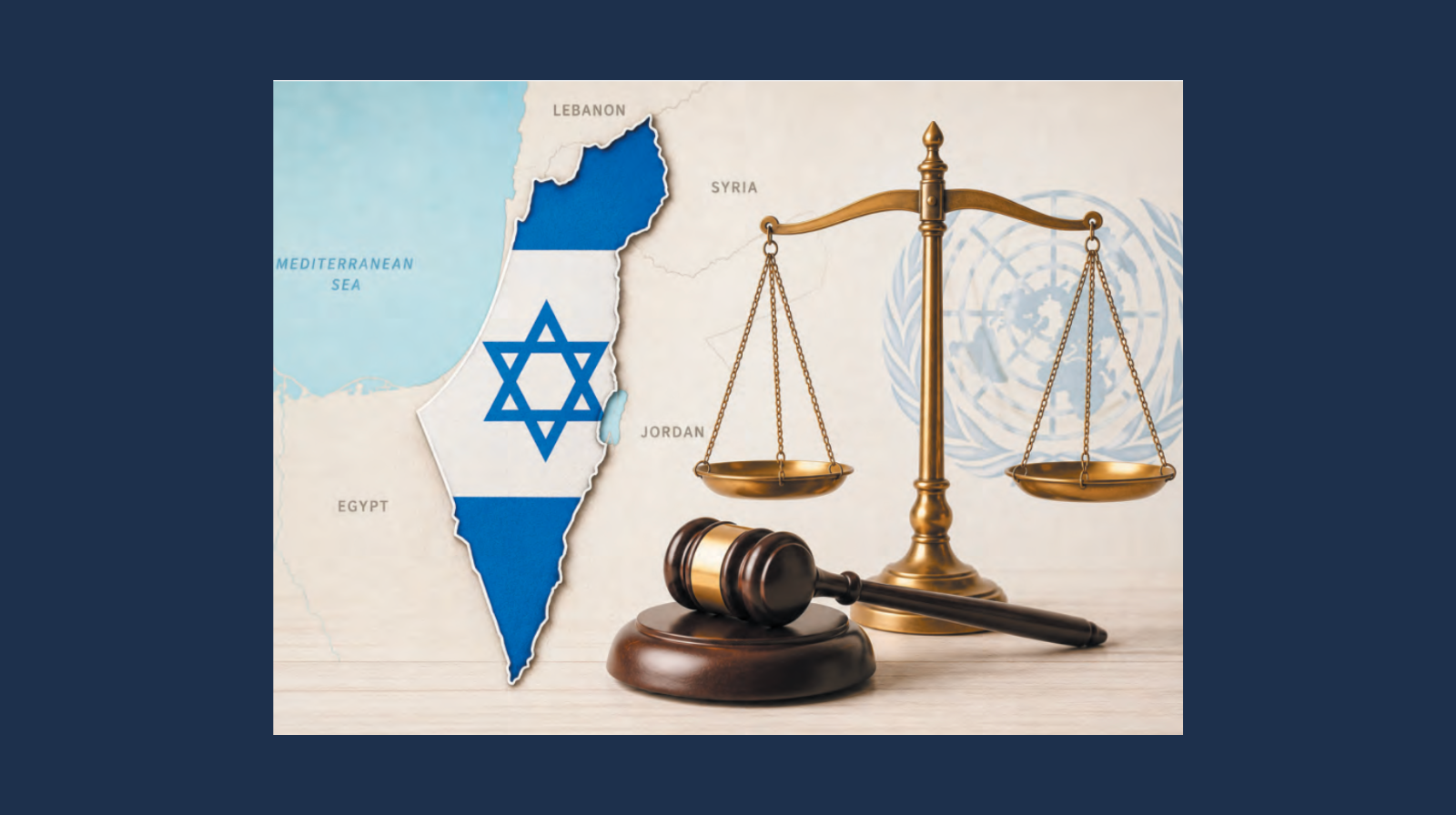
For the last five years, there has been a strange alliance between Islamist states (which have an anti-Western agenda) together with progressive lawyers in Western states like Denmark and Netherlands. They have been acting in concert to use engage in litigation under the 1948 Genocide Convention in the International Court of Justice (ICJ) to undermine Western-oriented states, especially the State of Israel.
So how does it work? The Organisation of Islamic Cooperation (IOC) comprises 57 states, most of them having an Islamic majority. The OIC has been instrumental in bringing two cases under the Genocide Convention to the ICJ: The Gambia vs Myanmar, and South Africa vs Israel. The revolutionary regime in Iran also played a key role in these cases.
Once these cases were launched, progressive legal advisers in key Western countries like UK, Germany, Denmark, France, Netherlands and Canada convinced their governments to “intervene” in these cases, pushing for an expansive approach to the concept of “genocide”. The end goal of both the Islamist states and progressive lawyers: to have Israel convicted of genocide.
The timeline: in 2019, the OIC enabled the small African country The Gambia to bring genocide proceedings against Myanmar before the ICJ over atrocities committed against the muslim Rohingya population. The OIC formally encouraged and authorized legal action through resolutions adopted by its member states, and OIC summits and ministerial meetings endorsed the strategy of pursuing proceedings before the ICJ. Since only states can bring contentious cases before the ICJ, the OIC could not sue Myanmar itself, so it designated The Gambia — an OIC member state and party to the Genocide Convention — to institute proceedings. As the litigation was expensive, the OIC helped finance it through a special fund supported by member-state contributions and the Islamic Solidarity Fund. The OIC also coordinated diplomatic support among its 57 member states, publicly backed the proceedings, promoted accountability efforts internationally, and supported engagement with international lawyers and advocacy groups involved in the case. After the ICJ ordered provisional measures in January 2020 requiring Myanmar to prevent genocidal acts and preserve evidence, the OIC continued publicly urging compliance and rallying international support for the Rohingya cause.
The Myanmar case shows how a small state with no direct territorial connection to the atrocities could invoke obligations owed to all parties under the Genocide Convention, with strong backing from a multilateral organization like the OIC.
After six years, the Myanmar proceedings is now drawing to a close. All arguments and evidence have been presented, the Court is now writing its judgment.
In the meantime, in late 2023, South Africa brought a case under the Genocide Convention against Israel claiming that Israel is committing genocide of the Palestinian people. Like The Gambia, South Africa had neither the finances nor the expertise to mount such a case; it was likely funded by Iran, with support of Qatar and other Islamist states.
For the last two years, the Myanmar case has been used by the Islamist states to lay a legal foundation for South Africa to succeed in its claim that Israel has committed genocide. Strikingly, the legal teams on both cases are almost identical; comprising highly-paid progressive international lawyers with strong anti-Israel sentiments like Prof. Philippe Sands.
Even more striking is the role of six Western states in these proceedings. Central to the definition of genocide in the Genocide Convention is the requirement of ‘specific intent’. In its jurisprudence to date, the ICJ has insisted that genocide exists only if the intention to destroy a people is the only possible inference that can be drawn from the factual circumstances. The ICJ has held that “claims against a State involving charges of exceptional gravity must be proved by evidence that is fully conclusive,” and the Court must be “fully convinced” that allegations of the crime of genocide have been committed.
France, Germany, UK, Netherlands, Canada and Denmark are now urging the court to lower the evidentiary threshold, arguing that the construction of the Convention in relation to the requirement of specific intent requires what they call a “comprehensive and holistic” approach to the available evidence. They also urge the Court to rely 100% on UN reports, many of which have an anti-Western bias – such as reports by the UN Special Rapporteur for the Palestinian Territories, Francesca Albanese.
For example, these states are trying to convince the ICJ that because the finding of genocide includes the intent to destroy “at least a substantial part of the particular group”, and children form a substantial part of the groups protected by the Genocide Convention, therefore high mortality rates among children provides an indication of the intention to destroy a group as such, at least in part. Given the significance of children to the survival of all groups, evidence of harm to children may contribute to an inference that the perpetrators intended to destroy a substantial part of the protected group.
Another argument they raise is that forced displacement may also constitute evidence of specific intent to commit genocide. This may be so even in cases where affected members of the group are not transferred to a place where they are subjected to conditions leading to their death or destruction. Acts of ‘ethnic cleansing’ may occur in parallel to acts prohibited by Article II of the Genocide Convention and may be significant as indicative of the presence of a specific intent (dolus specious) inspiring those acts. Furthermore, “the violent military operation triggering the forced displacement of members of a targeted group may similarly contribute to evidence of a specific intent to destroy the protected group, regardless of whether the acts triggering the forced displacement fall within one of the five categories of underlying acts of genocide.”
All of this totally ignores the fact that regimes like Hamas deliberately condust asymmetric warfare – strategies of using human shields to ensure maximum mortality rate of their own children. The arguments of Netherlands etc not only will make it easier for progressive ICJ judges to convict Israel of genocide; it actually raises risks for all Western countries engaged in terrorism.
The risk is that the applicable standard no longer demands that the perpetrator acted with genocidal intent. The armed forces of Western states engaged in defensive operations against terror regimes or in other counter-terrorism activities will be exposed to the risk of allegations they are committing genocide. As countries like the USA, Paraguay and Fiji have argued, the scope of the crime of genocide must be approached with special restraint. Attempts to broaden the definition of genocide risk diluting the specific normative function of the Convention, blurring its boundaries with other international obligations, and eventually undermining the treaty framework.